
Plantar Fasciitis Treatment from Benji Physio

Plantar fasciitis is a common foot condition that involves inflammation of the plantar fascia, a thick band of tissue that runs along the bottom of the foot, connecting the heel bone to the toes. The plantar fascia acts like a shock-absorbing bowstring, supporting the arch of the foot and helping with normal walking.
How can Benji Physio help treat your Plantar Fasciitis?
-
Our physios will run a thorough assessment and give you the correct diagnoses, rule out any other conditions (such Achilles tendinopathy, Tibialis posterior tendinopathy, stress fracture, etc.) and the right treatment plan for your condition.
-
ESWT has been shown to be very successful in treating tendon injuries such as Plantar Fasciitis and we have had fantastic results at the clinic.
-
Massage are a key part to relax the calf muscle to which the Achilles tendon and the Plantar Fascia is attached to.
-
We will review your biomechanics and identify any muscle imbalance, lack of range or movement and strength deficit.
A stiff hips, a lack of gluts strength in the opposite side, a back pain can contribute towards a Plantar Fasciitis and will therefore need to be addressed to guarantee a successful recovery.
Depending on our findings, we will tailor our rehab programme to resolve the deficit with a tailored exercise programme and will advise on proper footwear, insoles or heel raises as required.
-
We will conduct a full review of your training regime to understand the cause of your injury.
We will then propose a modified programme or a return to activity programme, whichever is necessary.
Free Exercises that can help
Plantar Fasciitis.

Symptoms of Plantar Fasciitis:
1. Sudden changes in Activity:
Rapidly increasing the intensity, duration, or frequency of physical activity, especially high-impact activities like running or jumping, without allowing the tendon sufficient time to adapt. Interestingly, the same happens if a rapid decrease of activity occurs. Tendons hate changes!
2. Age:
The risk of Plantar Fasciitis increases with age due to a natural decline in the flexibility and strength of tendons.
3. Biomechanical Factors:
- Flat Feet (Overpronation): Having flat feet can alter the mechanics of the foot and ankle, putting additional stress on the Plantar Fasciitis.
- High Arches : High-arched feet can also contribute to abnormal forces on the Plantar Fasciitis.
4. Improper Footwear:
Wearing shoes with inadequate support, poor cushioning, or improper fit can increase the risk of developing Plantar Fasciitis.
5. Tight or Weak Calf Muscles:
Inflexible or weak calf muscles can lead to increased strain on the Plantar Fasciitis during physical activity.
6. Inadequate Warm-Up or Stretching:
Failing to warm up properly before engaging in physical activity or neglecting to stretch can contribute to Plantar Fasciitis.
7. Training Errors:
Following training programs that are too aggressive or not allowing adequate recovery time between workouts.
8. Occupational Factors:
Jobs or activities that involve prolonged periods of standing, walking, or repetitive stress on the feet and ankles can contribute to fascia issues.
9. Previous Tendon Injuries:
Individuals who have had a history of Achilles tendon or calf injuries may be more prone to developing Plantar Fasciitis.
10. Systemic Factors:
Certain medical conditions and medications, such as rheumatoid arthritis, gout, or the use of fluoroquinolone antibiotics, may increase the risk of Plantar Fasciitis.
11. Obesity:
Excess body weight places additional strain on the Pantar Fascia during weight-bearing activities.
“It’s important to recognize and address these risk factors to reduce the likelihood of developing Plantar Fasciitis. Individuals engaging in physical activity should pay attention to proper training techniques, footwear, and overall foot and ankle health to mitigate potential risks.
If someone is experiencing symptoms or is concerned about their Plantar Fasciitis health, consulting with a healthcare professional for an accurate diagnosis and appropriate management is advisable.”
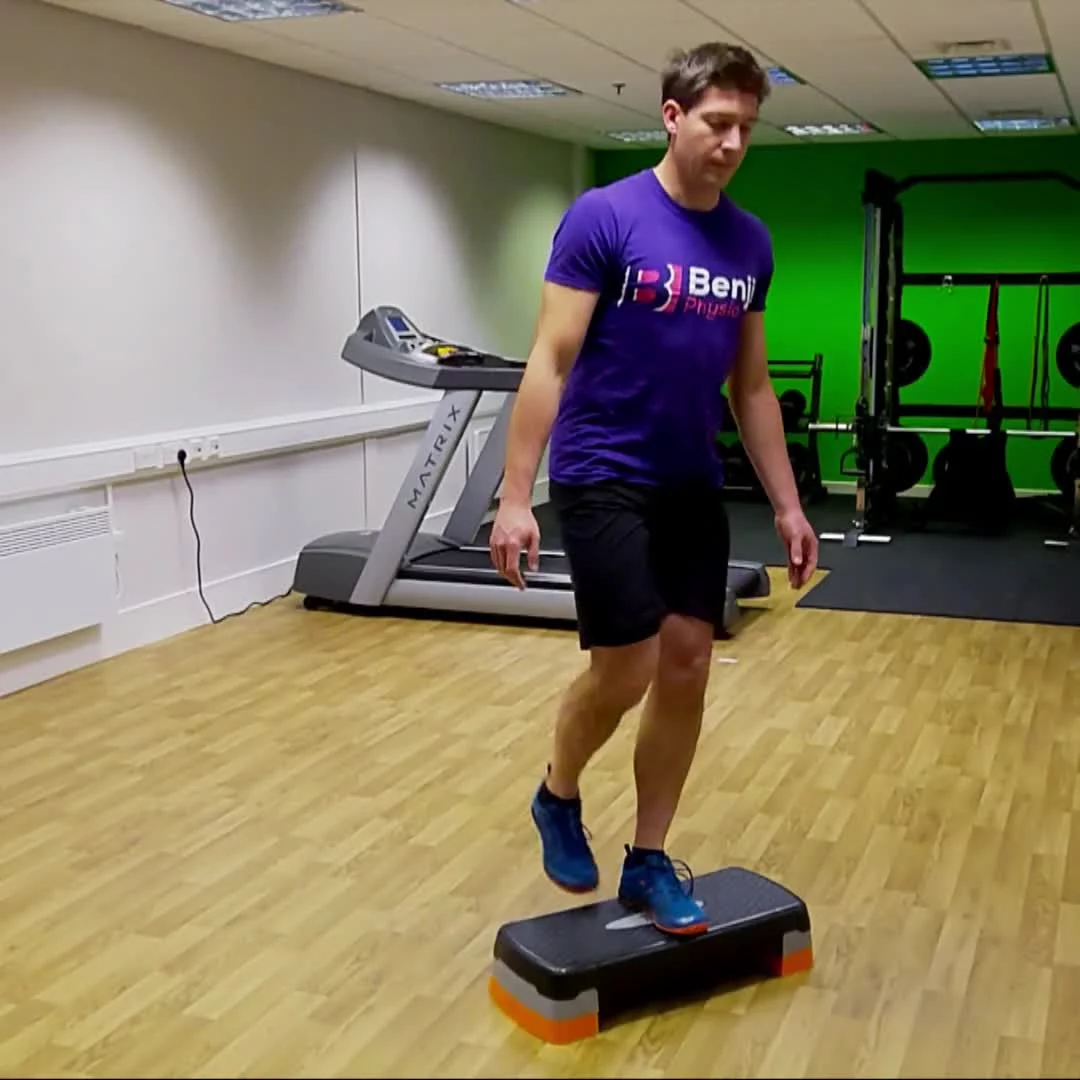
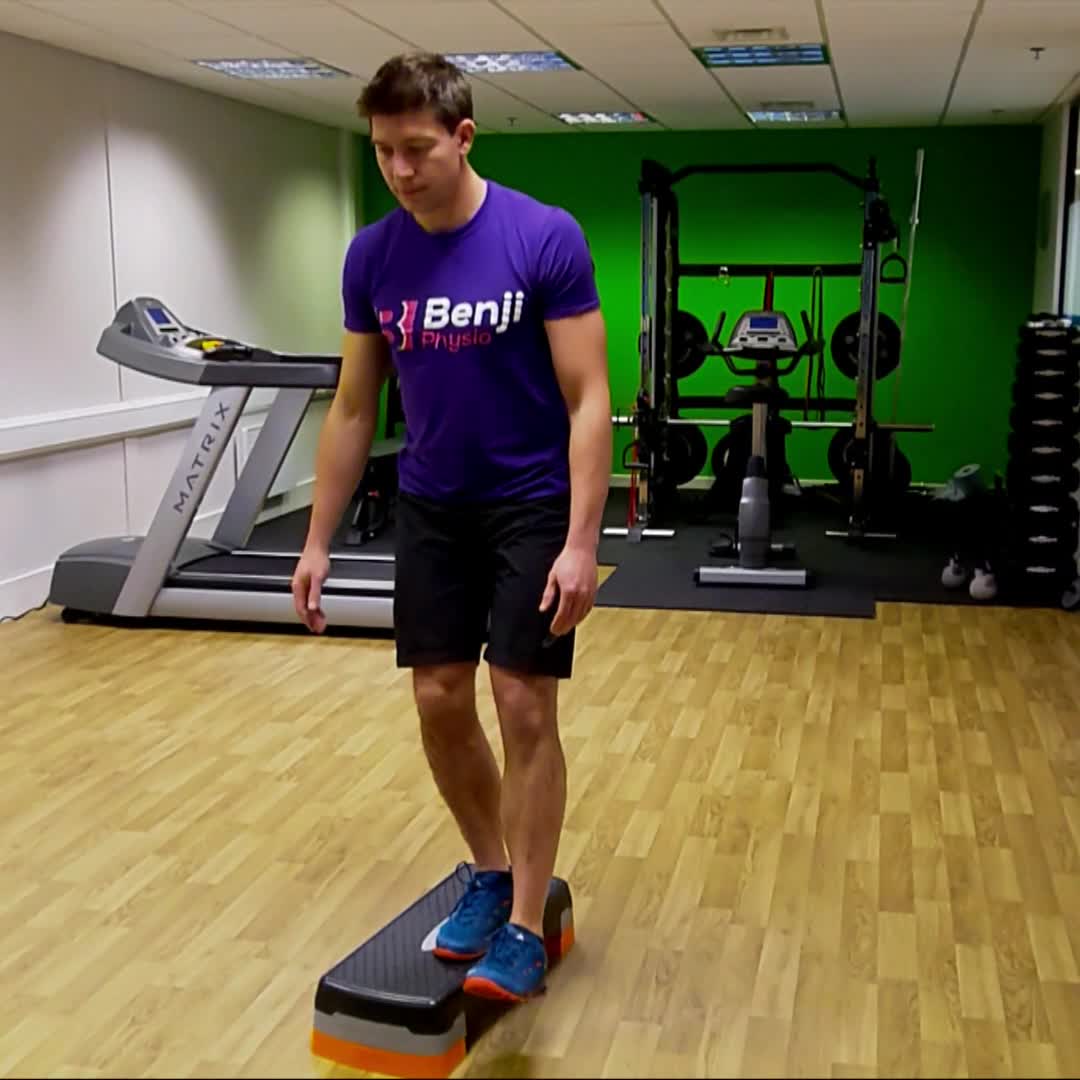
Stand tall with your legs straight. Hold onto a chair for balance.
Lift your heel up as high as you can, whilst keeping the other leg off the floor.
Bring your heel down as slow as possible.
Repeat as prescribed.
Repeat on opposite side.
Will help:
Plantar fasciitis
Tibialis posterior syndrome
Achilles tendinopathy
Achilles repair
Calf tear