
Got a knee replacement?
Planning to get one?
Welcome to your Knee Replacement Recovery Plan with Benji Physio
Get back to the life you enjoy!
Just had a knee replacement (or have one coming up) — and not sure what comes next? You're not alone. One of the most common things we hear is that patients leave the hospital with very little guidance on what to actually do in those first few weeks.
So we've put together a free Knee Replacement Recovery page to help.
It covers the questions we get asked most — and that often don't get answered until people come and see us:
How to manage pain in the early days
How to keep good movement from the start
Using crutches on flat ground and stairs
Progressing to walking without support
When you can get back to cycling, swimming and the gym
Plus, we bust a few common myths along the way.
Scroll down to get started – everything you need is right here. If you have questions that aren't covered here, get in touch, we're always happy to help. And if you'd like more hands-on support, check out our Total Knee Replacement programme.
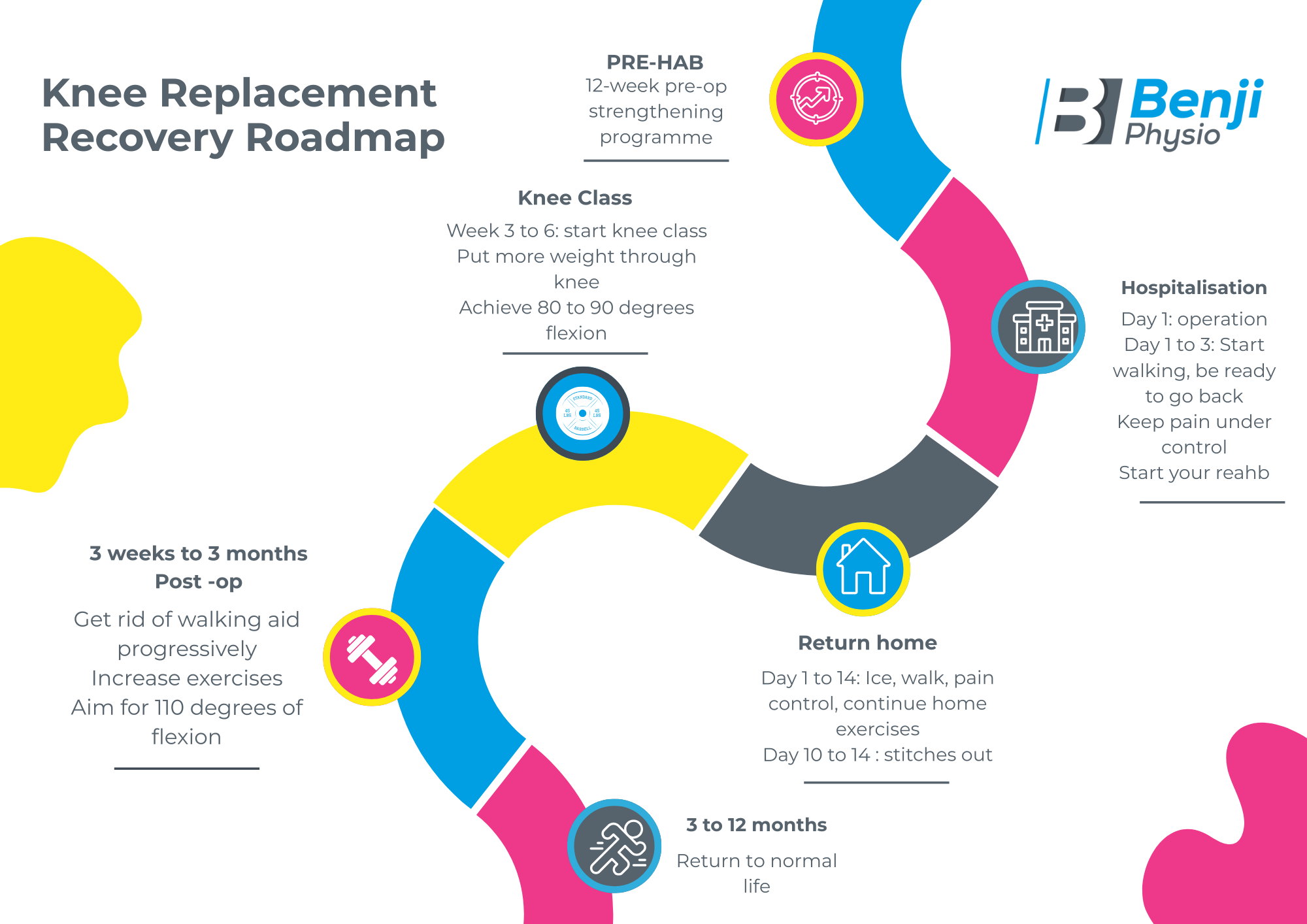
Your recovery journey
Mythbusters
First, let’s have a look at a few common myths or ideas that could actually slow your recovery down:
Myth #1: You will be pain-free after 6 weeks.
This is the one we hear the most at the knee replacement class. Patients feel that their operation has been unsuccessful if they are still in pain after 6 weeks. So let's be clear, you will be in pain after your op, and it will last a lot longer than 6 weeks. BUT it will be a different pain. It will be a post-operation pain rather than the arthritic pain. A knee replacement is traumatic on the soft tissue (like any other operation), and that alone takes more than 6 weeks to get better. Just to give you an idea: a cut on your skin takes from 1 week to 12 weeks to heal, a muscle tear takes 6 to 12 weeks to get better, a ligament 8 to 12, a tendon 6 to 52 (yes, 52 weeks!). So don’t worry if you still have some pain after 12 weeks following your knee replacement operation!
Myth #2: You should avoid moving if you are in pain.
That’s a concept that patients struggle with: you will not cause damage if you cause pain. Trust me, the implant that has been placed in your leg is strong, and it is not going anywhere. Moving the joint as much as possible post-op will reduce scar tissue and help you strengthen your leg faster. So don’t let the pain keep you from exercising.
Myth #3: You shouldn’t start exercising/physio before seeing your surgeon again.
Wrong. We see our patients as quickly as 2 weeks post-op, and they will be given a tailored treatment until they can join our knee class. As mentioned above, moving the joint as much as possible will help you gain strength faster.
Myth #4: Physio/specific exercises won’t help.
I am not joking, a few patients have been told that physio will not help post-op. Crazy! (These patients clearly knew better and came to see us anyway.) Physios are post-op rehab specialists. We help patients recover better, not only with exercises, but also with advice and encouragement throughout the process.
Myth #5: I will never get back to doing what I used to love doing.
Another persistent myth: All our patients return to some sort of exercise. Most of them return to what they used to do many years ago, and this includes running, skiing, tennis, golf and many more.
Myth #6: I won’t bother exercising until I get my op.
Another terrible idea. Recovery, pain and success rate improve if patients follow a 12-week mobility and strengthening programme before their op. In fact, you will get less knee pain in general if you start exercising, whether you get an op or not.
Pain management
Managing your pain following your operation is key. Badly managed pain will delay your recovery, so make sure that it is under control. In this video, we will review the best techniques to reduce pain following your operation.
You will also learn how long pain is expected to last following your operation, when you should respect it and when you should push through it.
How to diminish pain and swelling following your operation?
1. Use the prescribed painkillers
2. Use ice efficiently.
3. Move !
4. Do not too much too quickly - You might pay the price later on.
How to use your sticks or crutches
Using your sticks and crutches will help you mobilise following your operation. Putting weight through your joint is an essential part of the recovery. It will help the implant settle within the bone properly, help decrease joint swelling and prevent post-operative issues such as DVTs.
Correct use of your sticks or crutches will also prevent excessive pain, injuries to your shoulder/wrists and decrease your risk of falls. Ultimately, you want to get rid of walking aids within three months, and the following videos show you how to achieve that progressively and safely.
How to set up your crutches or sticks
Make sure your crutches or walking sticks are set up properly and avoid getting shoulder and wrist pain in the long-term.
Walk with two crutches or sticks
Remind yourself how to use your crutches at home and use the 3-point gait technique safely.
The Reciproqual gait
Within a few days you should more confident to put more weight on your knee and you can start thinking of use the reciproqual gait.
Walking with one crutch/stick
Within 6 to 12 weeks, you should be able to progress to one crutch walking. Make sure you hold your single crutch on the correct side…
How to manage stairs
Using stairs can be very intimidating. The following videos will show you how to use stairs safely with your crutches, whether there is a bannister or not.
Don’t forget:
When going upstairs, use the good leg first, the bad leg next and then the sticks.
When going downstairs, it is sticks first, the bad leg next and then the good leg.
Going upstairs
Going upstairs with one crutch.
Going upstairs without a banister
How to climb stairs without banisters
Going downstairs
How to go downstairs with my crutches
Home Exercises
First things first, you MUST do your exercises.
The exercises you’ve been given at the hospital will help you move your leg gently, regain some muscle strength and avoid DVTs. Unfortunately, within a few days, they are not hard enough to help you progress with your recovery.
To promote good healing and ensure a great recovery, you need to work hard on moving the joint and strengthening the muscles. It can be scary and painful, but it is necessary. You WILL NOT cause damage to the replacement joint when doing your physio exercises. You will not cause damage by trying to move. It will be painful because the soft tissues around the joint are tight, have not moved properly for a while and are still recovering from the operation. But they must be moved for you to get better.
This video shows you what we expect patients to work on before they join us in the Knee Replacement Class. The following six exercises, done well, will make a major difference to your recovery. So we advise patients to start them as soon as possible:
Knee extension in lying (promotes quads strength to help you straighten your knee)
Knee extension with a pillow (promotes knee locking)
Knee flexion (helps with the knee bend)
Squats (very important: strengthen the whole leg and use the knee in a loaded position)
Bridging (promotes early activation of gluteal and hamstrings muscles)
Heel raises (promote the use of calves and gluteal muscles in a loaded position)
The first 6 exercises you must do following your op!
To be done 10 times , 4 times a day.
When can I swim and cycle?
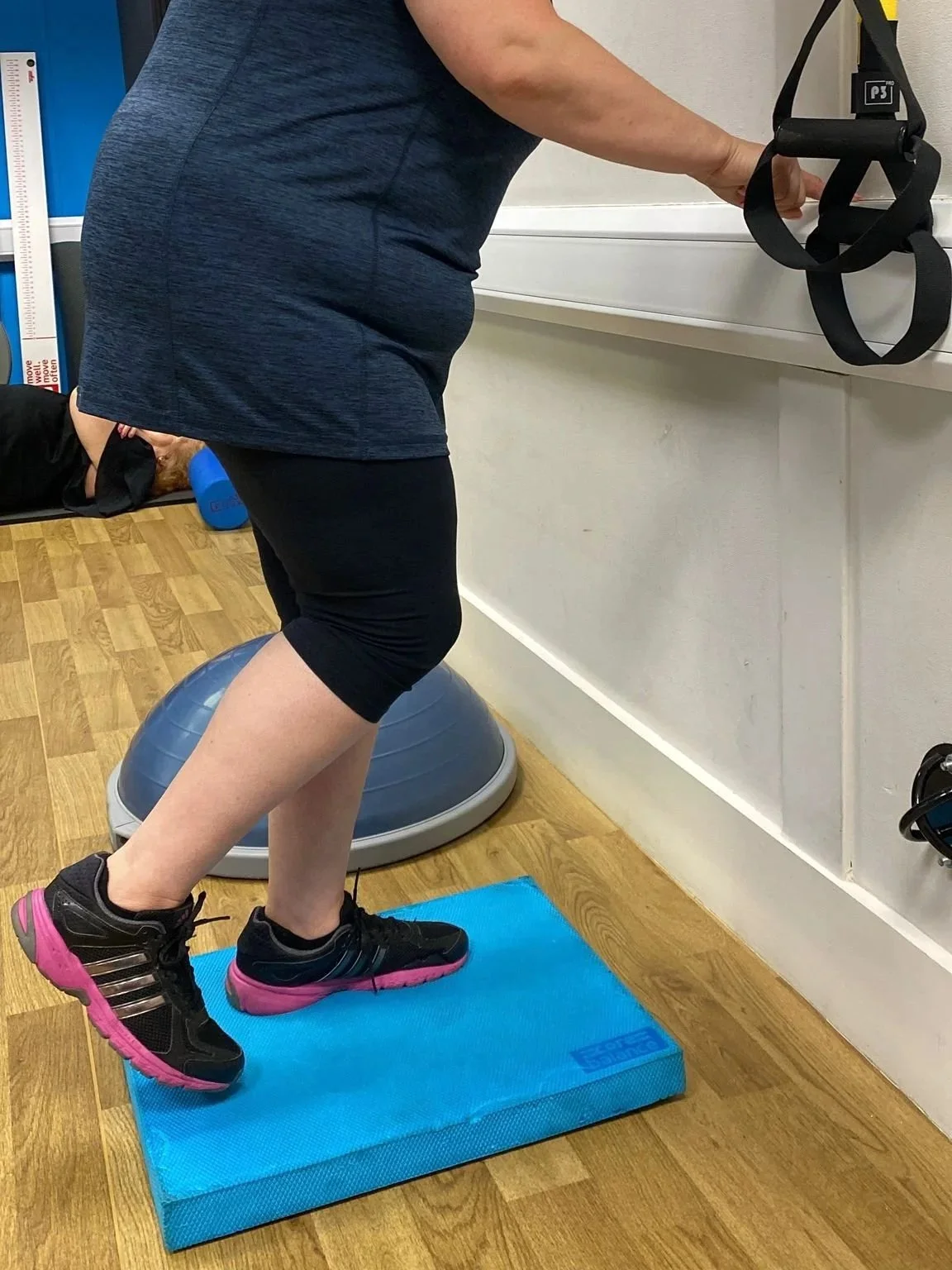
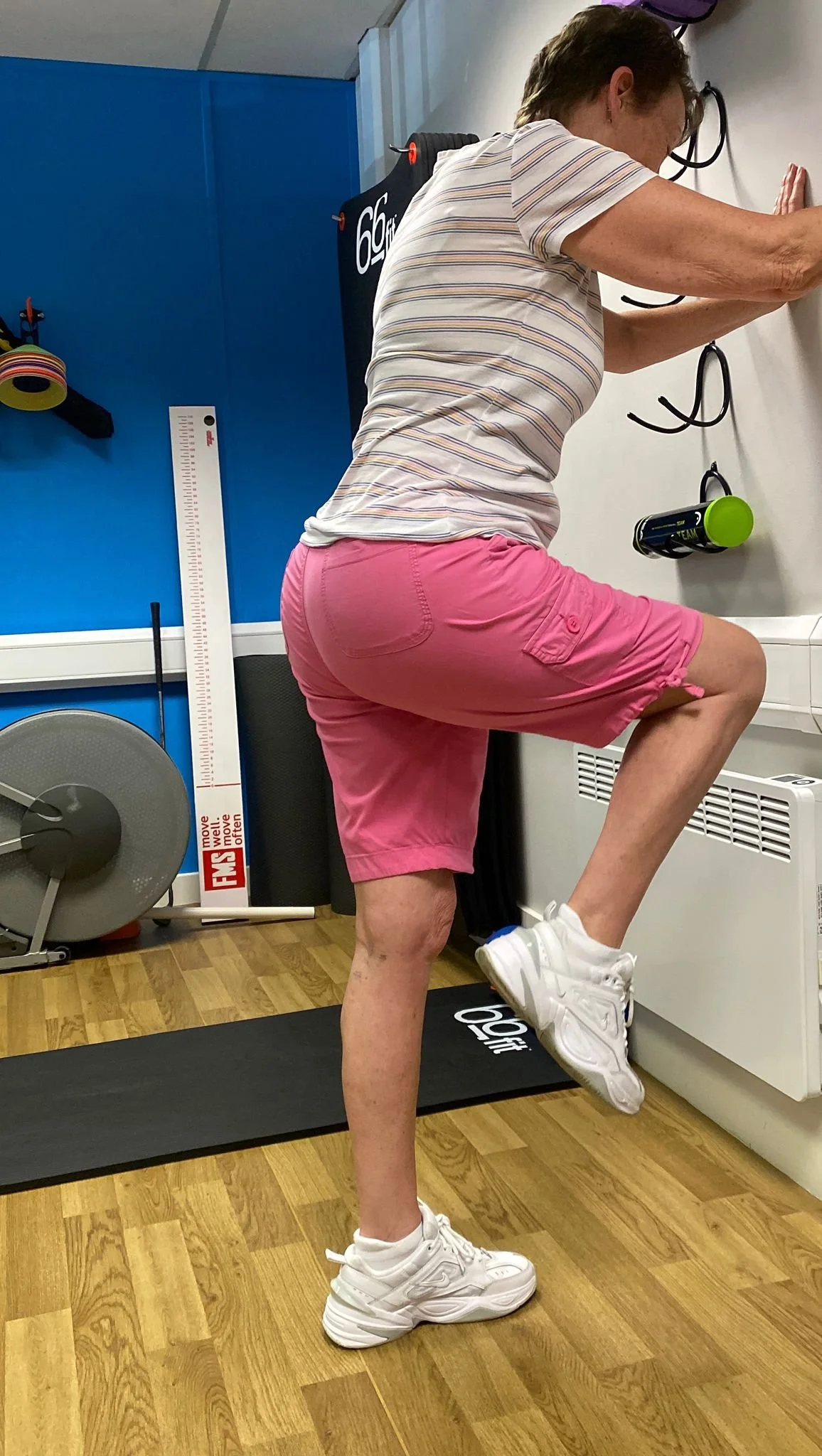
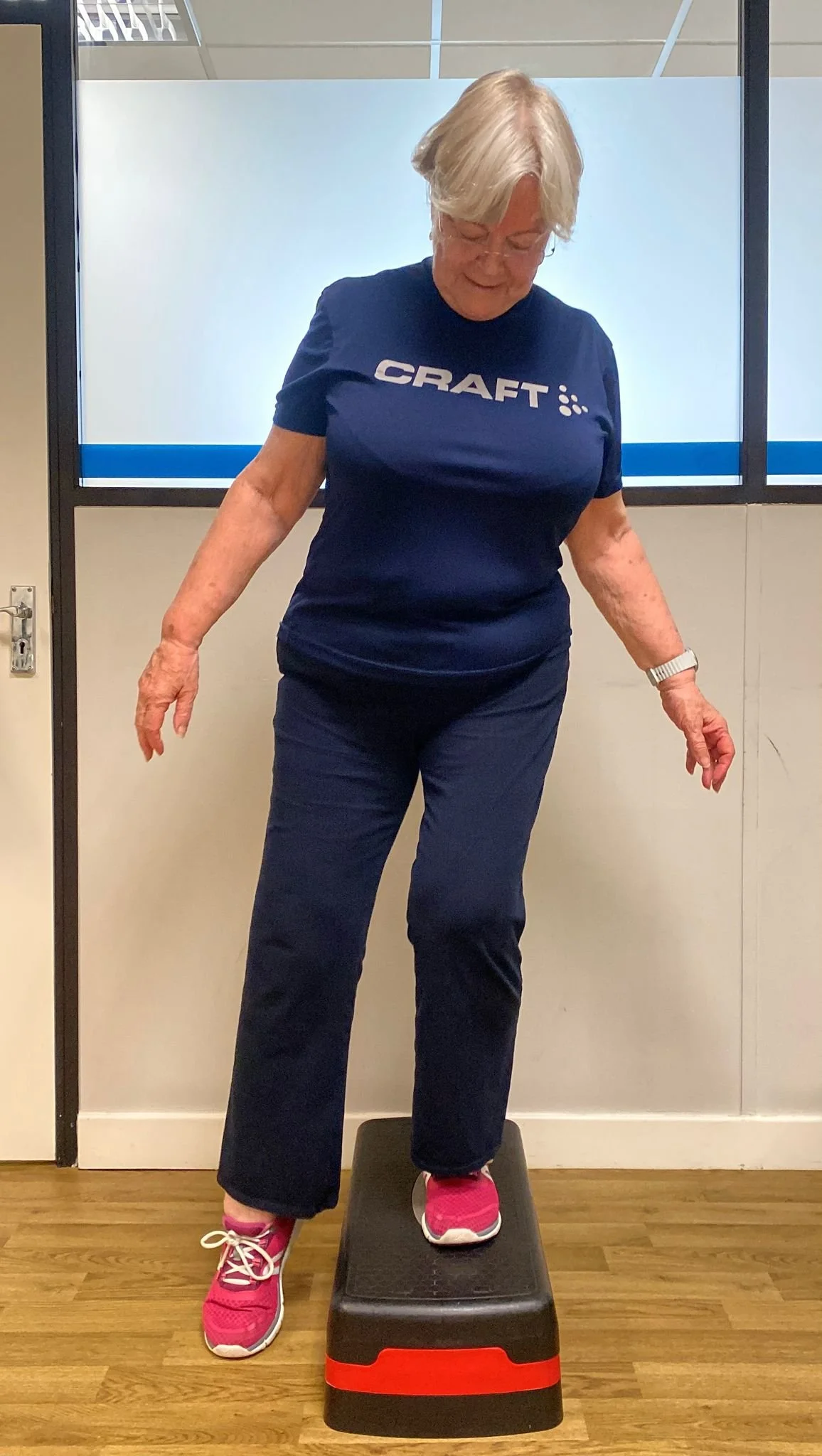
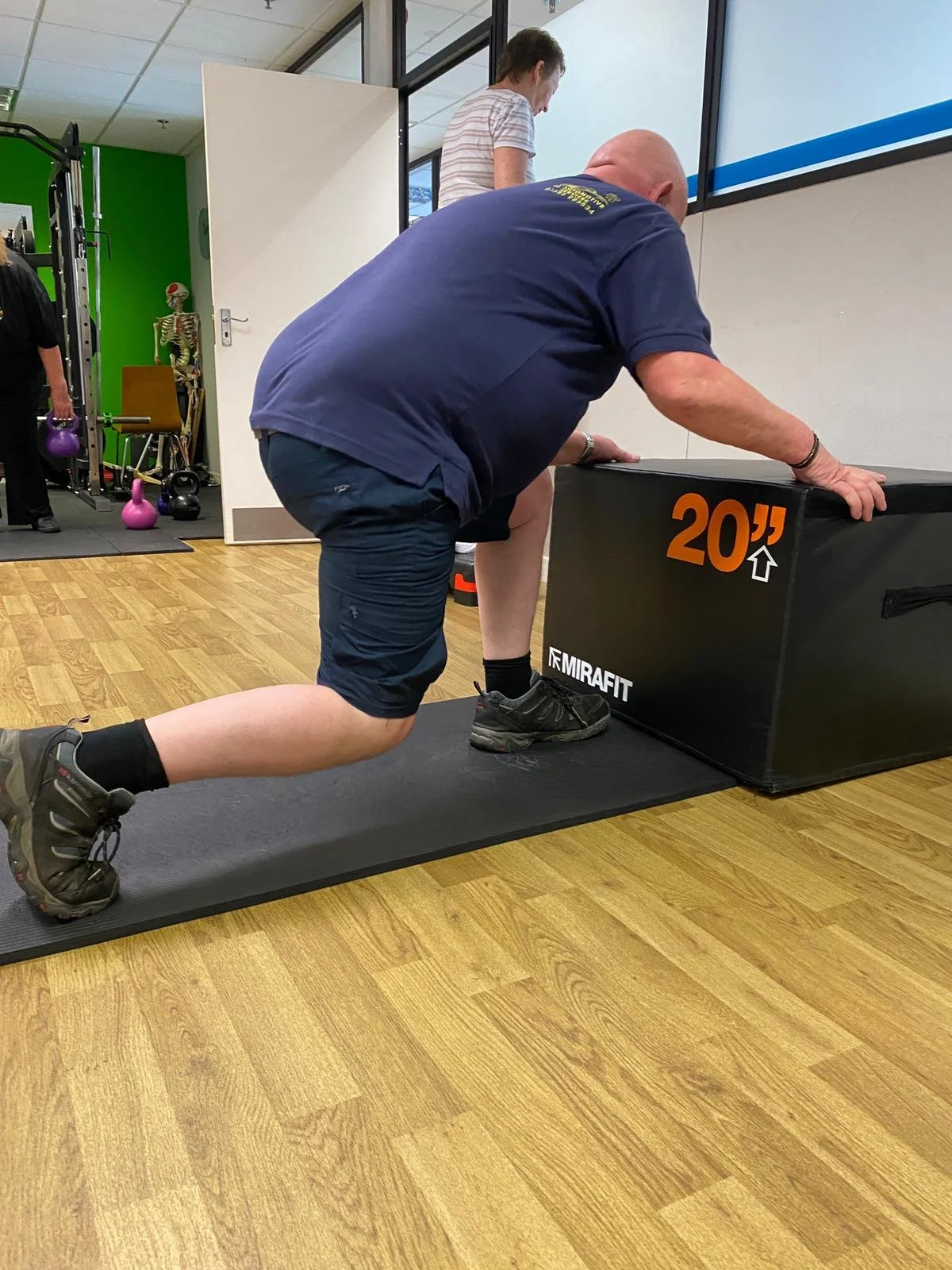
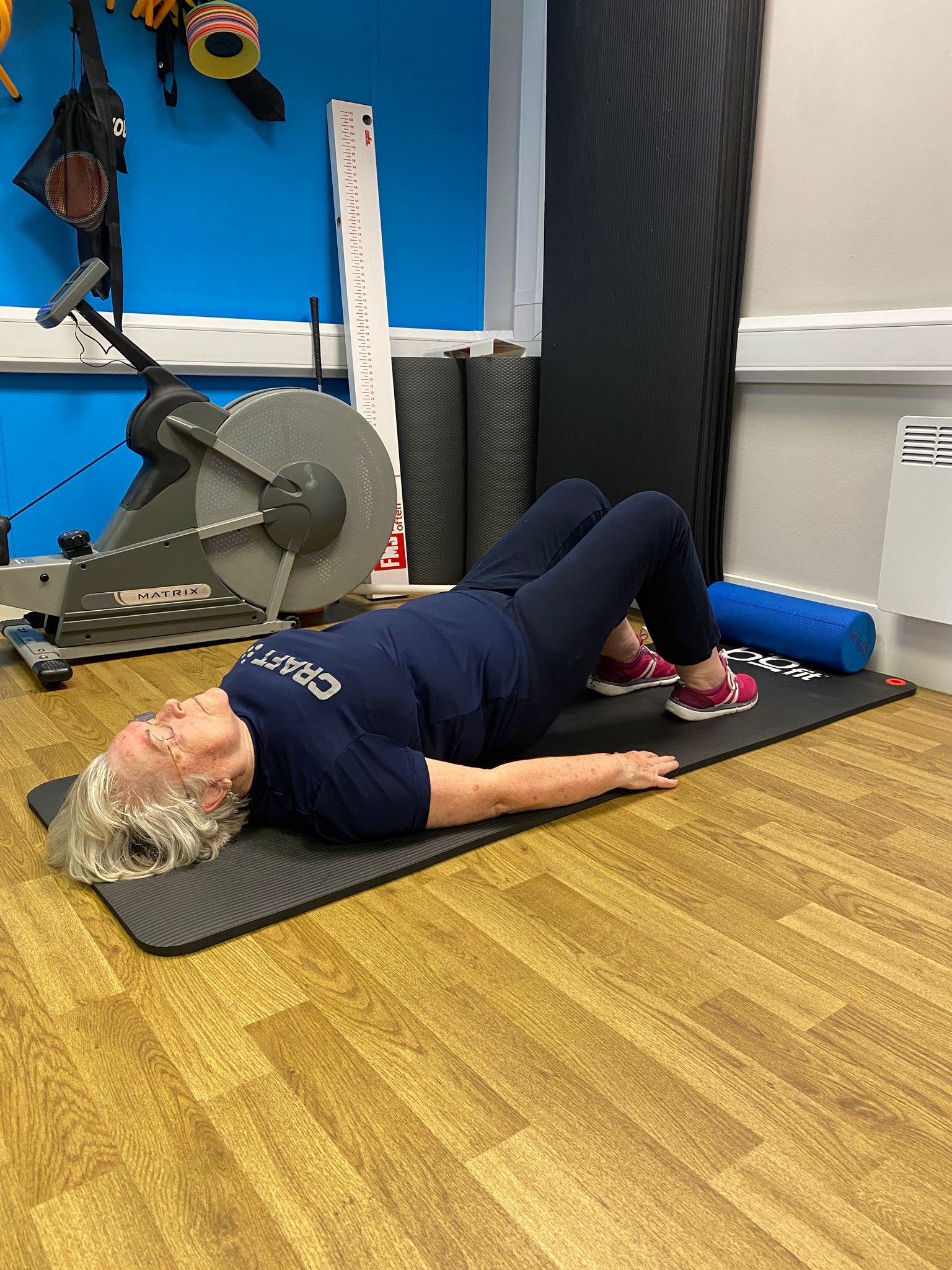
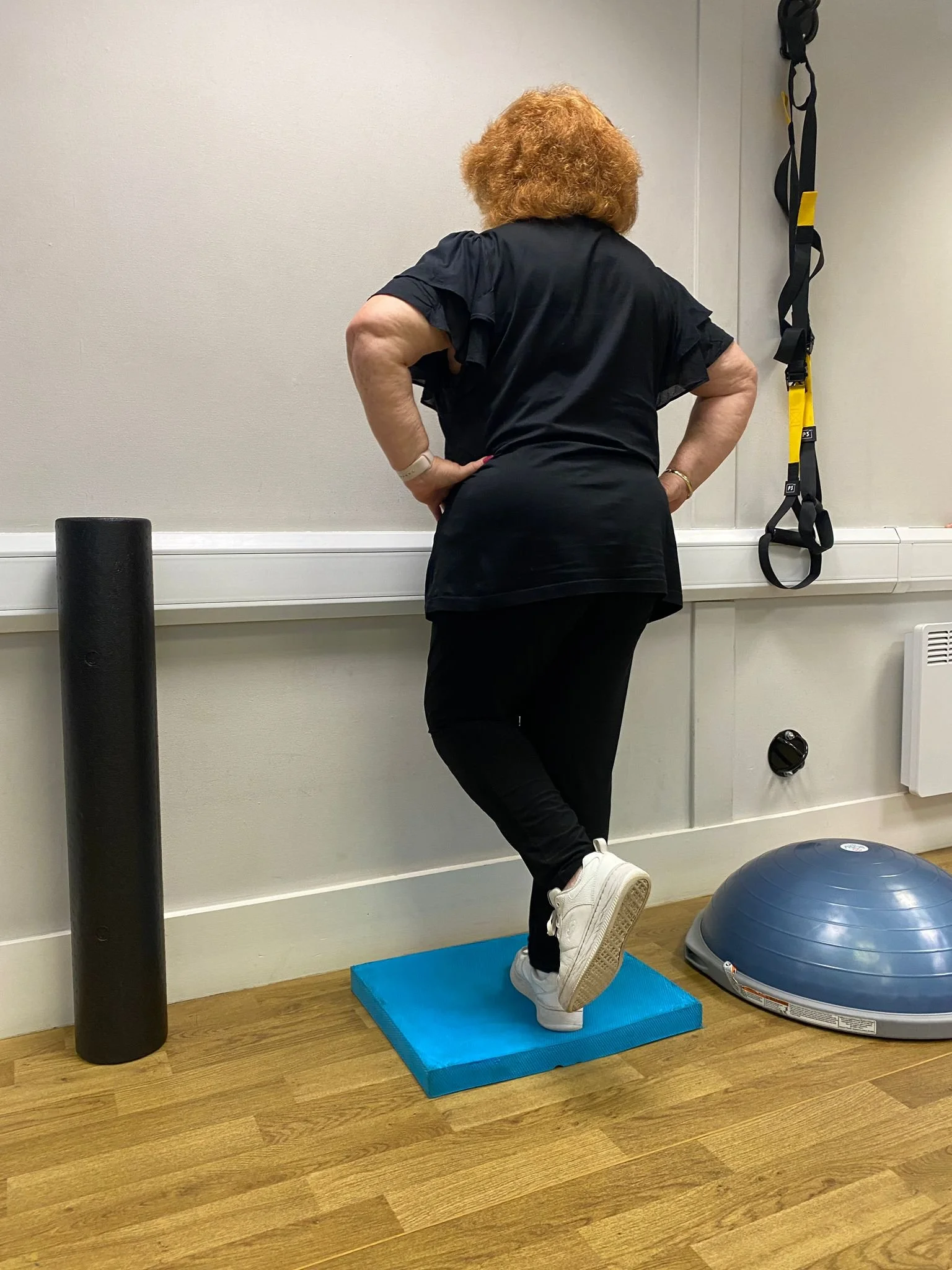
Whether you are waiting for your knee operation or have had one recently, our Knee Replacement Class will help you prepare or recover under the supervision of specialists and in the company of other patients who are going through the same recovery process.
Our weekly class has already helped dozens of patients make the most of their knee replacements and go back to the activities they love.
How to get started: After a one-to-one assessment with one of our physios to make sure that you are recovering as expected, you will be able to join our small group class.
Our Knee Replacement Class
The Concept
One hour
9 Stations
3 sets
Squats
Lunges
Steps
Treadmill walking
Cycling
Bridging
Floor work
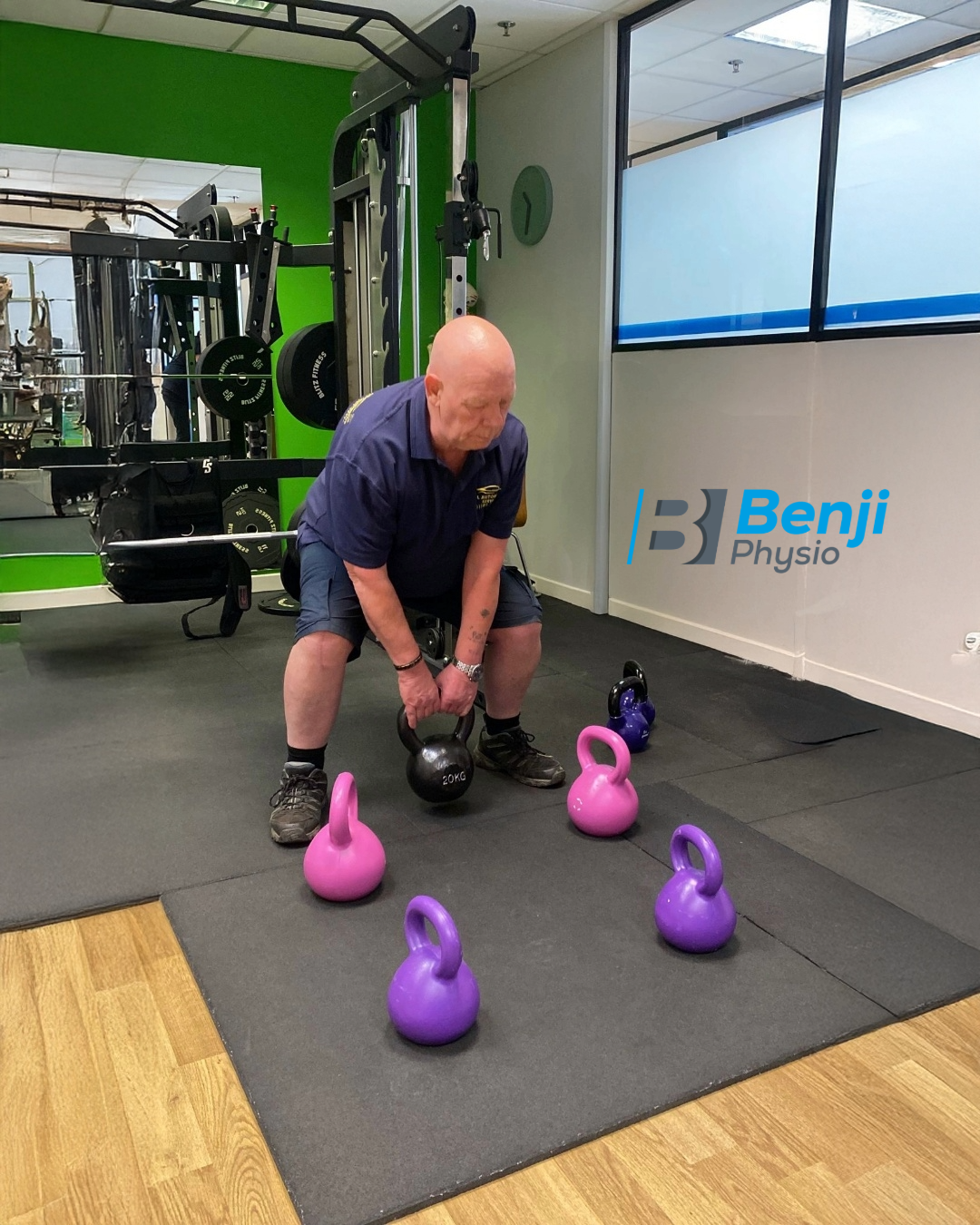
Worried it will be too hard?
Scared to be the weakest?
We’ve got you!
Rest assured, every exercise in the class is adapted to your level and your needs — because no two recoveries are the same.
Our patients range from their mid-fifties to their eighties, each with their own story, their own level of fitness and their own goals. Some are dealing with challenges that started long before the operation. Others are further along than they expected. What everyone has in common is that they understand exactly how you feel — and there's no judgment here.
That's what makes the class special. It's a group of people working toward their own goals, at their own pace, in an environment that genuinely supports them.
The class will challenge you — in the best possible way. And there's nothing quite like seeing someone get back on a bike, kneel on the floor or take on a high step for the first time.